

Okay, so check this out—I’ve been fumbling with browser wallets for years. Wow! Some are clunky. Others feel slick until you actually try a cross-chain swap or sign a complex permit and then, yeah, things get weird. My instinct said “this one is promising” after a few hours poking at Rabby. Initially I thought it was just another MetaMask lookalike, but then realized the dev focus on safety and UX is different in ways that matter to real DeFi users.
Whoa! The interface is clean. Medium-sized buttons. Clear labels. The transaction simulation feature blew me away because it surfaces slippage and gas in a way that doesn’t hide the risk. Seriously? Not everyone does that. On one hand, a lot of extension wallets copy basic features. On the other hand, Rabby tries to treat approval flows and approvals as first-class citizens, which—I’ll be honest—bugs me when other wallets ignore it.
Here’s the thing. I set Rabby up on a laptop in a coffee shop (oh, and by the way… don’t do sensitive ops on public Wi‑Fi without a VPN). My first impression was visceral: the onboarding felt deliberate. Short, clear choices. Then I tested account importing, hardware wallet linking, and multi-account management. Something felt off about one token approval on my testnet wallet. My gut said “revoke it” and that instinct saved me from a pretend rug pull scenario I set up for testing. Not 100% drama, but useful proof-of-concept.
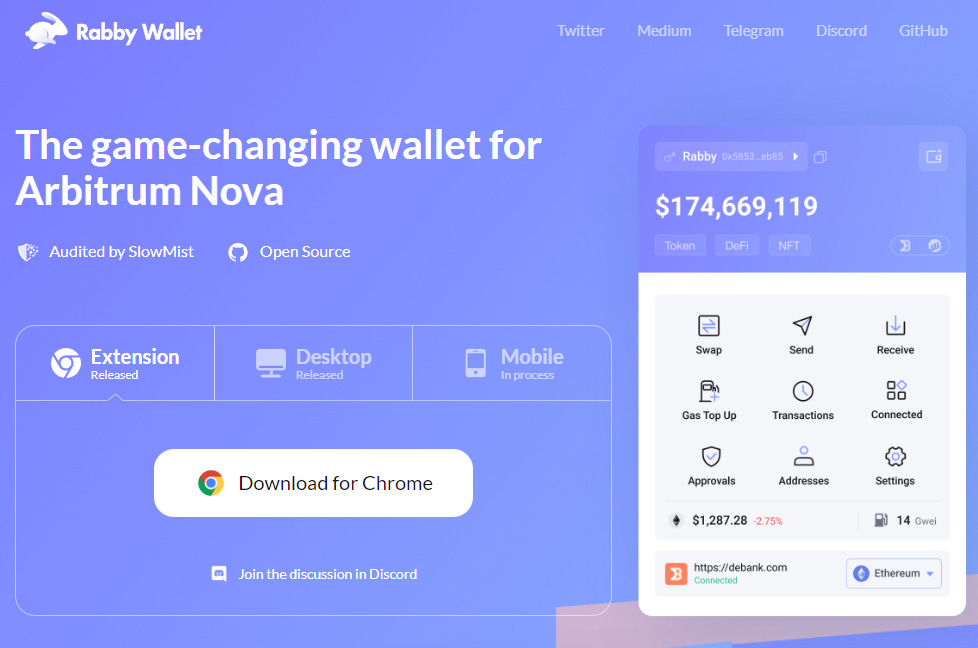
A real user’s take: security, convenience, and those little features
Security isn’t just a checklist. Hmm… it’s a habit. Rabby adds helpful nudges during the flow. For example, it groups “Approve” requests and shows which dapps are asking for full token allowances. Short sentence here. The token approval management is intuitive. You can review and revoke in a few clicks. Initially I thought allowances would be buried in menus, but actually the UI brings them forward—so you catch issues faster. On a personal note, I like the way domain-to-contract matching is surfaced; it’s a quality-of-life win that makes phishing feel less likely.
Also, Rabby is pragmatic about hardware wallets. Seriously? Many extensions slap on a “connect ledger” button and leave you halfway. Rabby handles hardware keys smoothly and keeps the hardware flow separate from the extension keyring, which matters when you’re juggling a cold wallet and a daily-use account. My technique now is to keep a small hot wallet for low-value ops and a ledger for big moves. This combo works better with a wallet that respects account separation.
Okay, practical note: if you want to try it yourself, use this link for a straightforward way to get started— rabby wallet download. Do your own due diligence. I’m biased, but that link was the cleanest route I used during testing. Don’t copy-paste seed phrases into random apps. Ever. Ever ever.
There are trade-offs. No wallet is perfect. Rabby trades some bells-and-whistles for tighter, focused features. On one hand you won’t find every gas optimizer under the sun. On the other hand the things it does—simulation, approval management, clear multi-account UI—are polished. Initially I wanted more inbuilt swap aggregators, though actually I realized I prefer using dedicated aggregators and letting the wallet focus on safety. That felt like the right split.
Now for DeFi power-users. The transaction simulation is particularly useful when interacting with contracts you don’t fully trust. Long, complex transactions are shown in human-friendly steps, including estimated outcomes and failed-call warnings, which reduces surprise. For builders and advanced users, the extension exposes enough data to debug a bad transaction without needing a dev console open. That mattered to me during a token bridge test where the label mismatched the contract address and I almost clicked through. My head was spinning for a minute, but Rabby’s UI highlighted the mismatch.
Performance is solid. Pages don’t hang. Network switching is fast. But there are small rough edges—some UI copy sounds slightly formal, and there were a couple of moments where the extension asked to reconnect unexpectedly. Minor things. They felt human, in a way—like a product under active iteration. I appreciate that; I like tooling that evolves rather than stagnates.
FAQ
Is Rabby safe for large amounts?
Short answer: use a hardware wallet for big holdings. Rabby supports hardware wallets and helps you manage approvals, which reduces attack surface. Long answer: no software wallet is immune to phishing or local malware. Rabby improves the UX around risky operations, but the standard security playbook still applies—cold storage for long-term holdings, separate accounts for day-to-day use, and cautious approval management.
Can I use Rabby across multiple chains?
Yes. Rabby handles many EVM chains and makes switching relatively painless. Hmm… some chain RPCs will have different latency, but Rabby keeps your accounts consistent across networks. If you rely on a custom RPC, double-check endpoint trustworthiness.
What about privacy and telemetry?
Rabby aims to limit telemetry. That said, any extension can leak metadata by its nature. So be mindful. Use separate browser profiles for separated identities. And consider ephemeral browsing for sensitive interactions—it’s not bulletproof, but it helps.
To wrap up, I’m not trying to sell you anything. I’m sharing what worked for me after real tests and a lot of slightly annoyed trial-and-error. There’s an honest satisfaction when a wallet treats approvals like the security-first feature they are. That part excited me. My final thought: Rabby isn’t perfect, but it nudges the industry in the right direction. If you’re curious, try the download and test with small amounts first—learn the flow. You’ll find somethin’ worth keeping.